What Procurement Teams Should Look for in Workwear

0

Workwear buying decisions are often more complex than they appear. On the surface, it may look
like a simple vendor comparison exercise. In reality, procurement teams are making decisions that
affect employee adoption, replacement cycles, operational consistency, and overall workplace
experience. That is why evaluating industrial workwear only on price is a mistake.
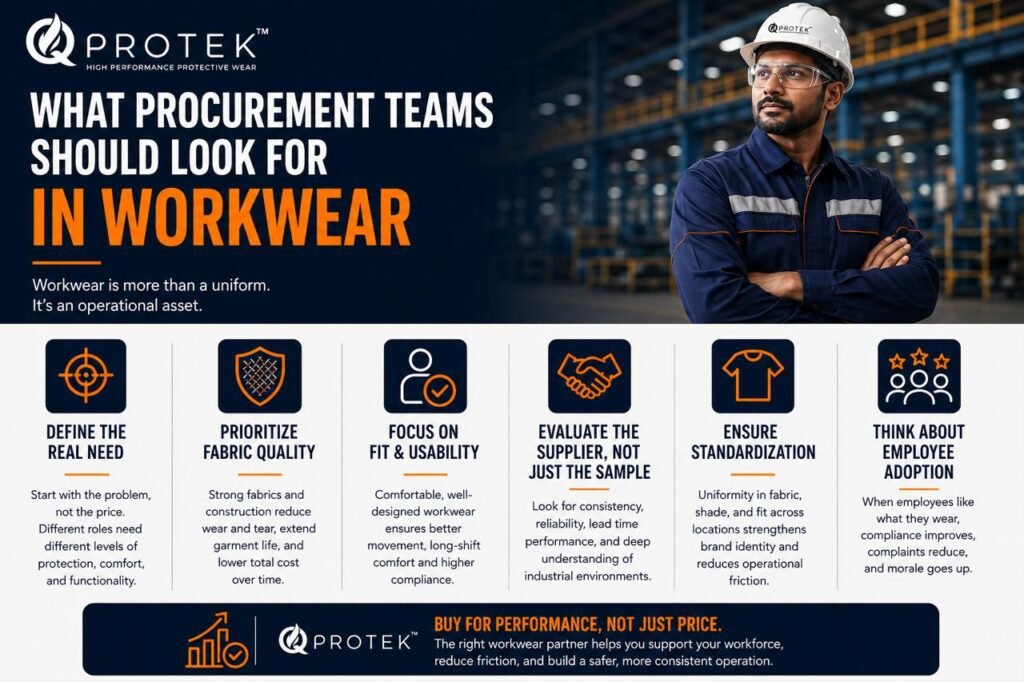
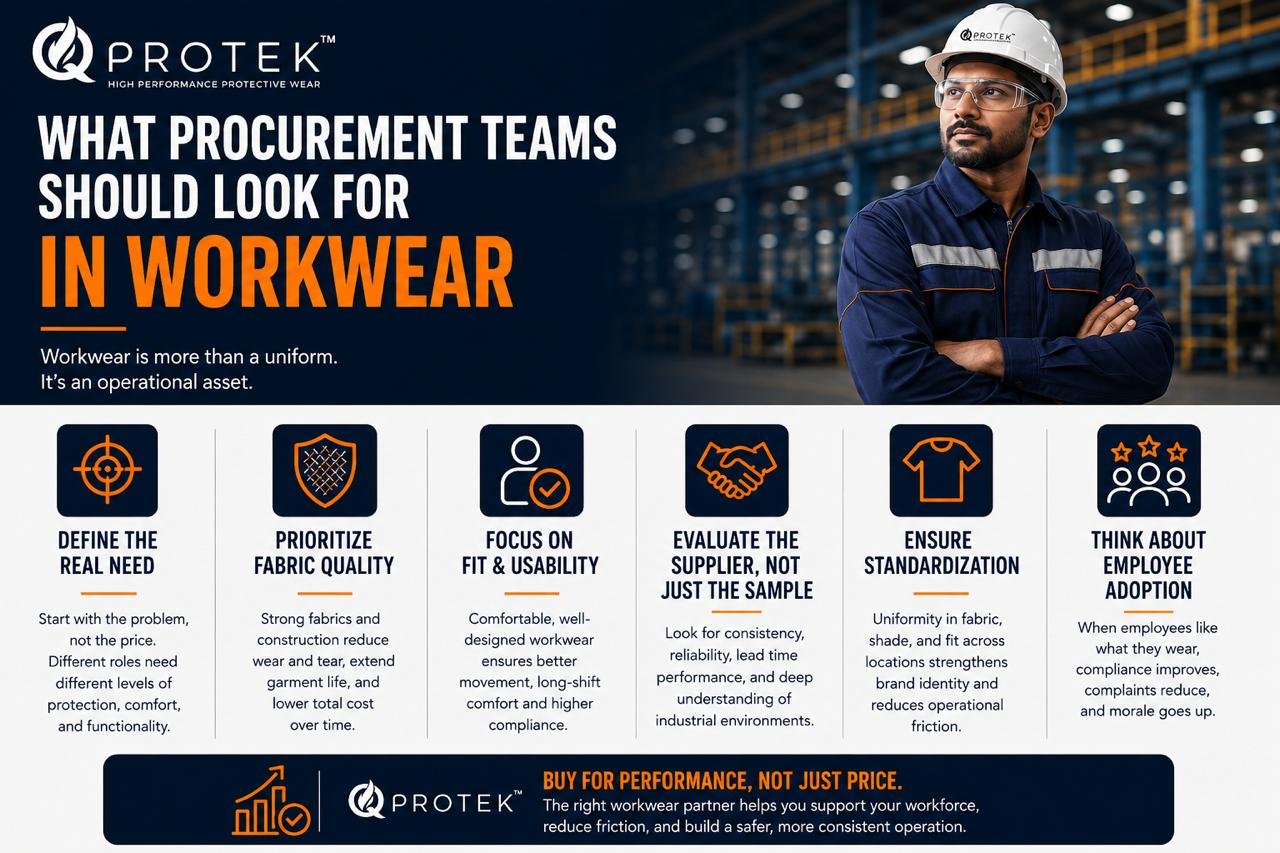
The first thing procurement teams should ask is not “How much does it cost?” but “What problem
is this garment meant to solve?” A warehouse team, a maintenance technician, a plant operator,
and an EPC site worker all face different conditions. The same uniform cannot perform equally
well across all these environments. If the garment is not aligned to the use case, the company
may end up with low compliance, poor comfort, and faster-than-expected wear and tear.
Fabric quality is one of the most important areas to assess. In industrial settings, garments
experience repeated stress from movement, abrasion, washing, and environmental exposure. A
cheaper garment may appear cost-effective initially, but weak fabric and poor stitching can lead
to early failure. That means more replacements, more complaints, and more hidden expense over
time. Procurement teams should think in terms of lifecycle value, not just unit cost.
Fit and usability matter just as much. If workwear is too tight, too loose, or too restrictive,
employees may not wear it consistently or properly. This becomes an operational issue, not just a
clothing issue. Good industrial workwear should enable movement, support long shifts, and feel
practical enough that workers do not need to fight with it during the day. In many organizations,
uniform complaints are really usability complaints.
The supplier evaluation process should also go beyond samples and brochures. Procurement
teams should look for consistency in sizing, production reliability, lead times, customization
capability, and the supplier’s understanding of industrial environments. A vendor who only sells
garments is not the same as a partner who understands job roles, safety expectations, and the
realities of large workforce deployments.
Another key factor is standardization across multiple locations or departments. Large
organizations often struggle when the same uniform looks different across batches because of
shade variation, fabric inconsistency, or finish issues. That may seem minor, but it creates brand
inconsistency and extra administrative work. Reliable supply performance matters more than
many buyers realize.
Smart procurement teams also recognize the value of employee adoption. If workers dislike the
uniform, the organization pays twice: once for the garment, and again in the form of low usage,
replacement requests, and poor morale. The best procurement decision is one that balances
budget discipline with real-world performance.
Industrial workwear should be purchased like an operational asset. The right supplier helps the
organization reduce friction, improve consistency, and support the workforce more effectively.
That is the level of thinking modern procurement teams need.

Leave a Reply

Your email address will not be published. Required fields are marked *