Why Industrial Workwear Is More Than Just a Uniform

0

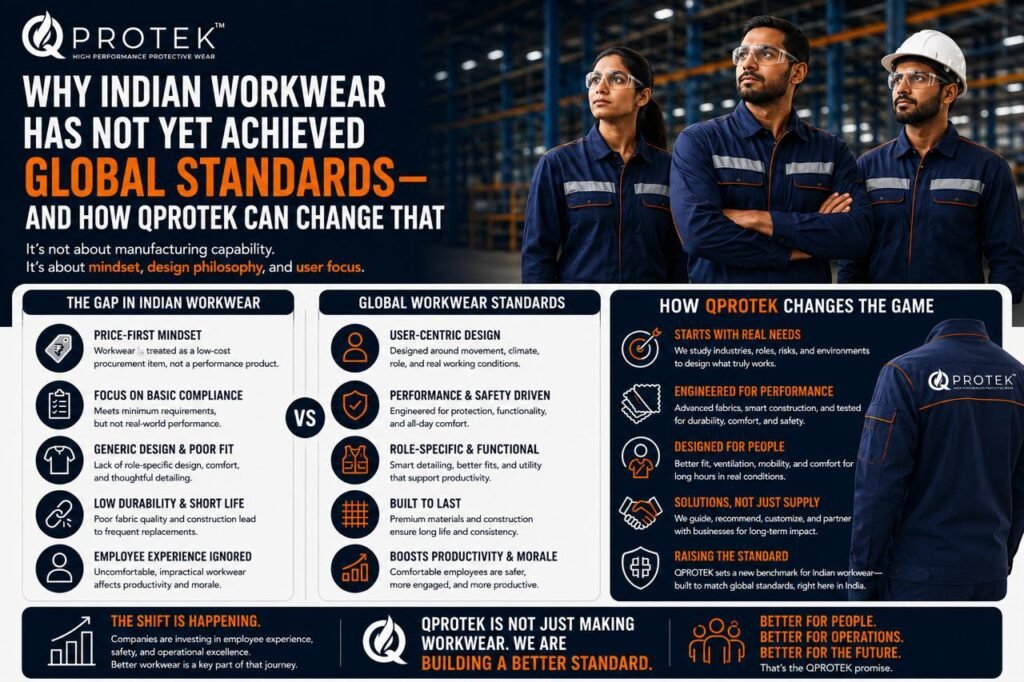
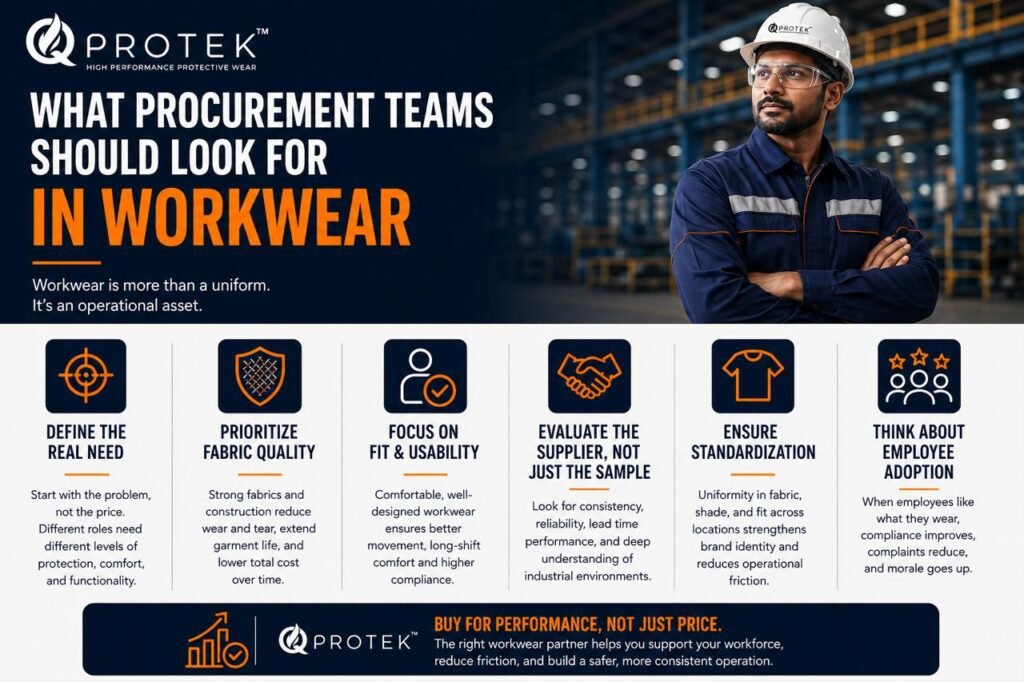
Industrial workwear is too often treated as a procurement checkbox. A company needs uniforms,
so it sources uniforms. The decision is usually narrowed to price, color, and basic compliance. But
in industrial environments, workwear is not simply about appearance or standardization. It is a
daily operating system that affects how employees move, work, feel, and perform.
In manufacturing plants, logistics hubs, EPC sites, warehouses, and infrastructure operations,
employees wear workwear for long shifts under physically demanding conditions. Heat,
movement, friction, dust, repeated washing, and task-specific strain all affect how a garment
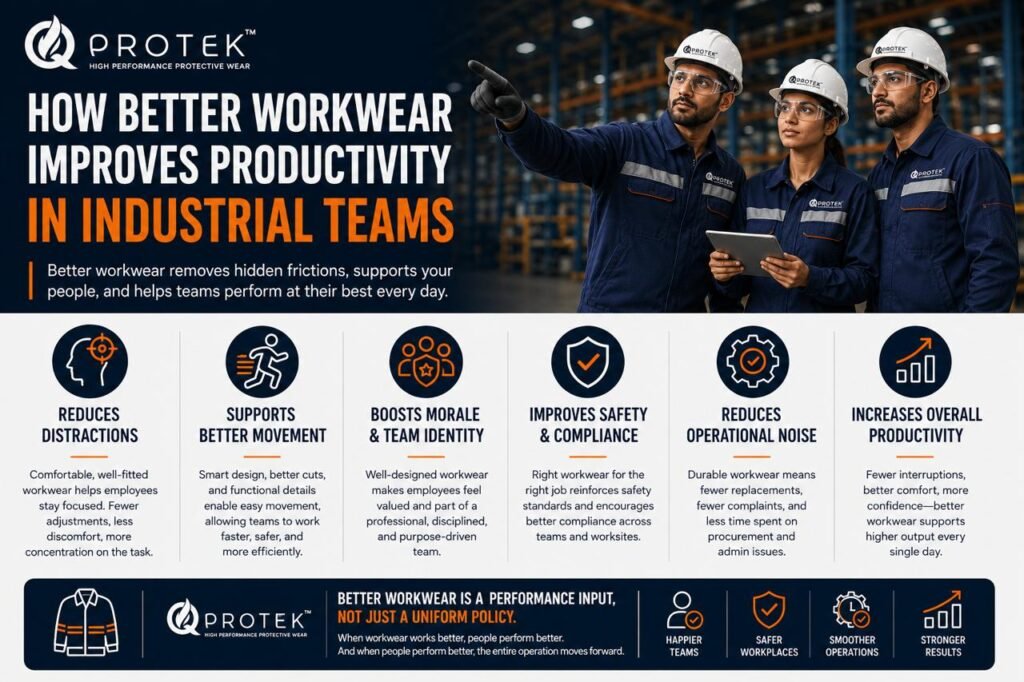
performs. If the workwear is poorly designed, it becomes a source of irritation and inefficiency.
Employees may constantly adjust it, avoid wearing it properly, or simply feel less comfortable
throughout the day. That discomfort does not stay isolated to clothing. It influences morale,
concentration, and even the speed at which tasks are completed.
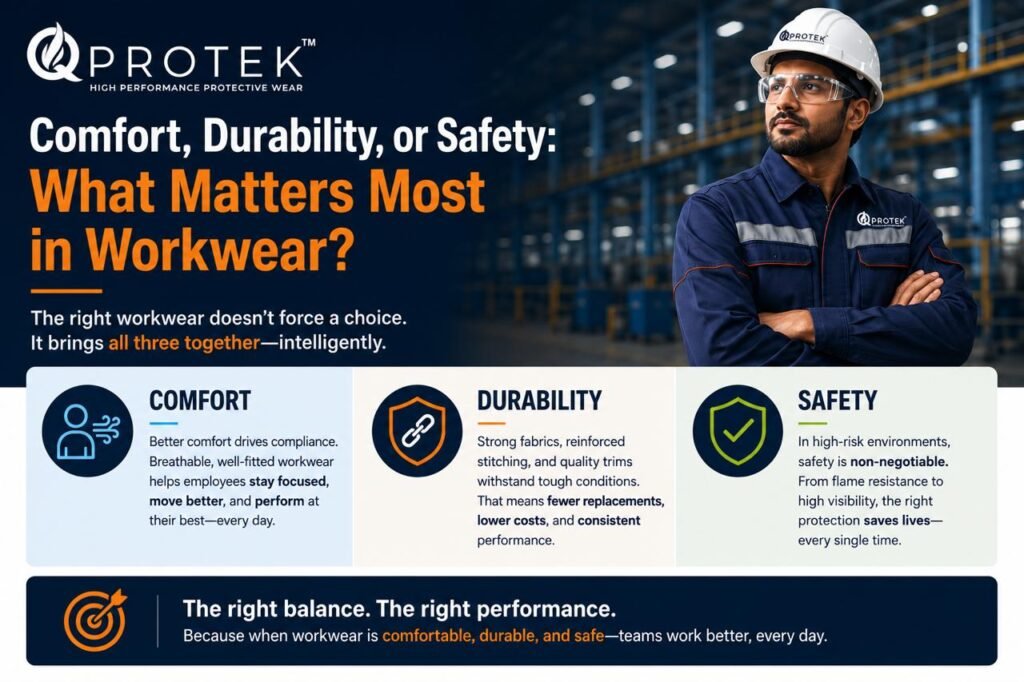
This is why industrial workwear should be viewed as part of workforce design, not just uniform
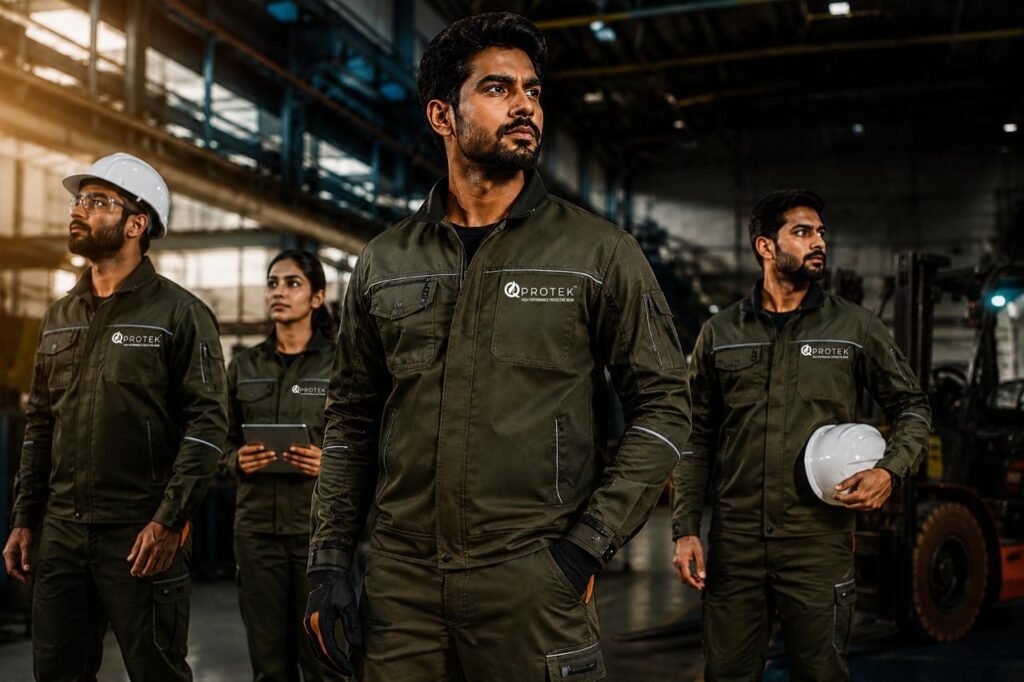
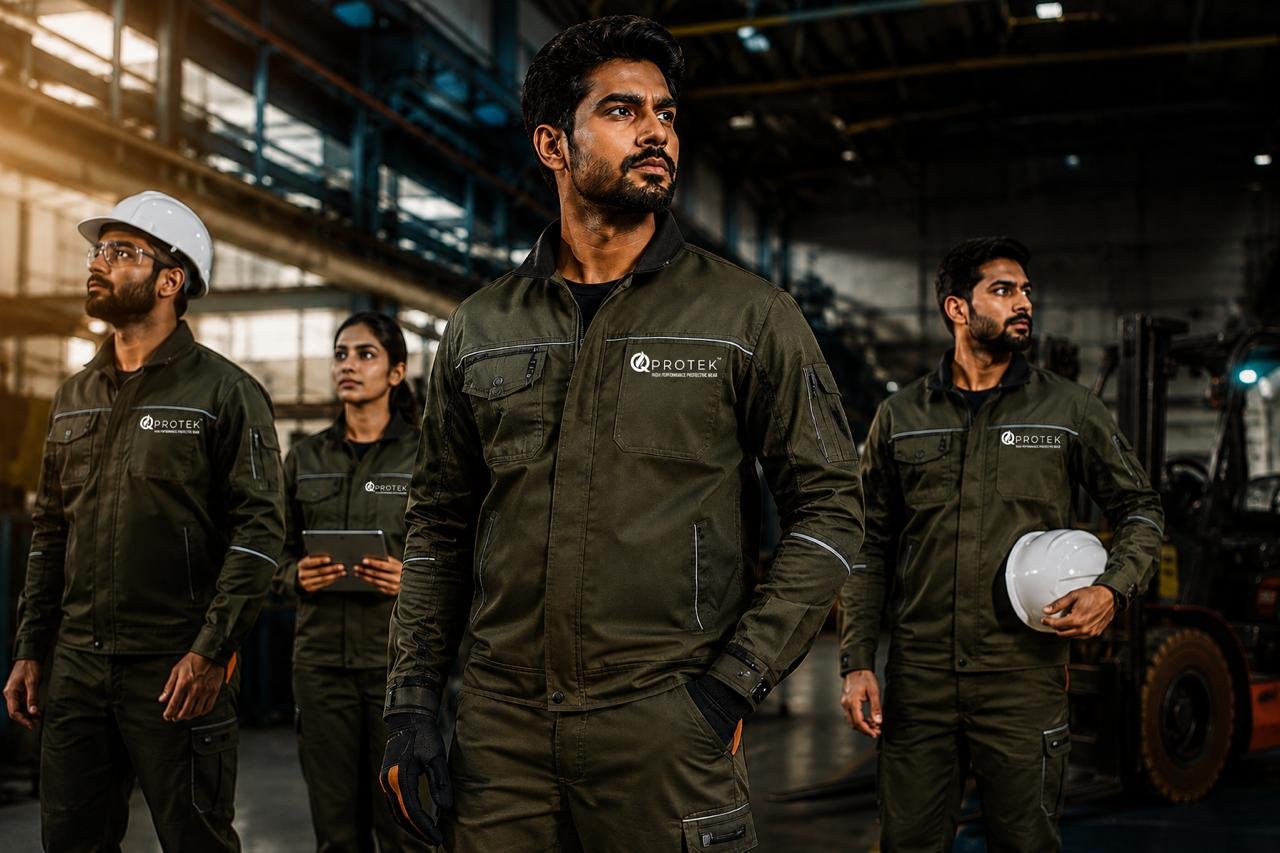
supply. A well-designed garment supports mobility, durability, safety, and a sense of
professionalism. It can help teams look coordinated while also functioning better in real work
conditions. When employees feel that their apparel is built for their actual job, it changes how they
relate to the organization. The garment becomes a signal of care, structure, and seriousness.
There is also a leadership dimension to this conversation. The way a company chooses workwear
reflects what it values. If the only priority is the lowest possible price, employees receive a
message that cost matters more than comfort, functionality, or day-to-day usability. But when
organizations invest in workwear that is fit-for-purpose, they create a stronger workplace culture.
They demonstrate that operational efficiency and employee well-being are not competing goals.
Industrial workwear also has a strong external impact. It shapes how clients, contractors, visitors,
and stakeholders perceive the organization. A team that looks disciplined, well-equipped, and
professionally dressed communicates order and capability. In sectors where execution matters,
that visual signal is not small. It can reinforce trust before a single conversation begins.
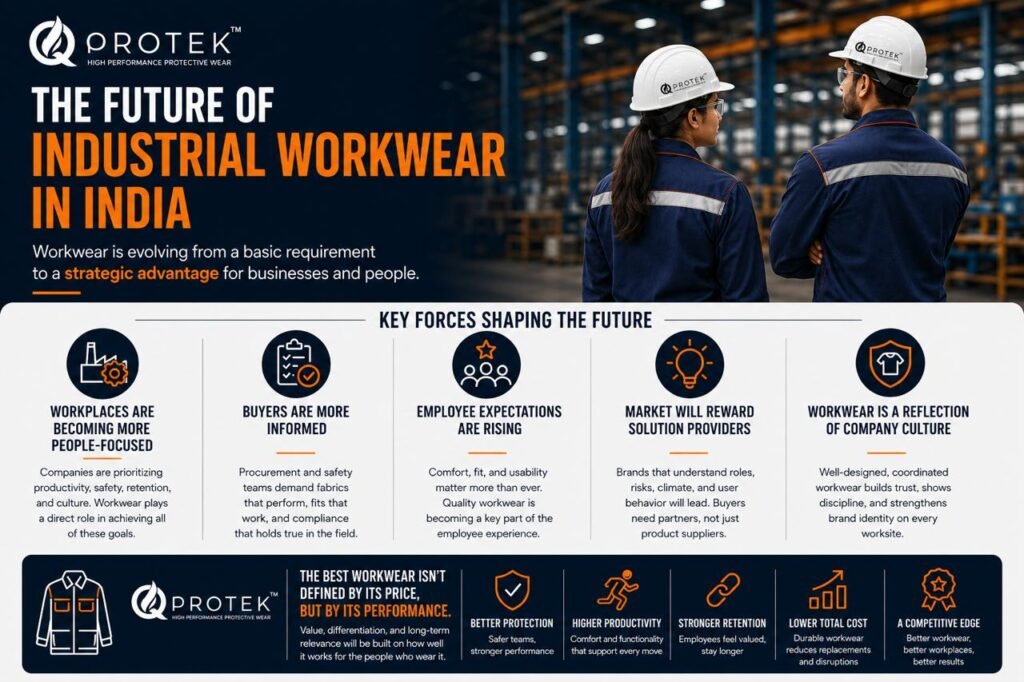
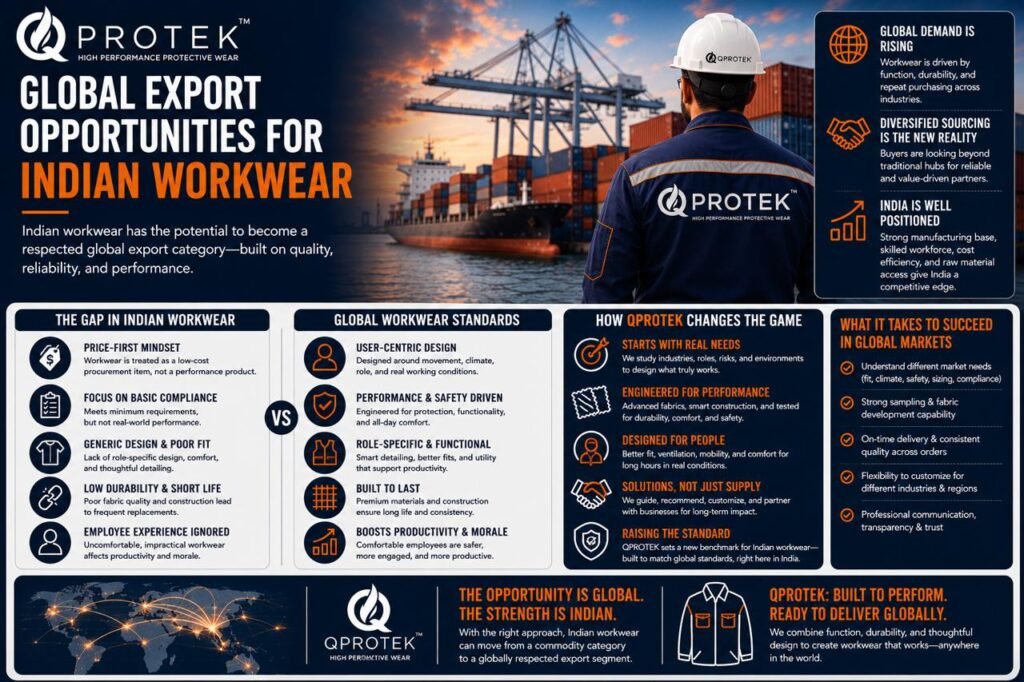
The future of workwear in India will belong to companies that think beyond fabric. They will ask
better questions: Does this garment support the role? Does it last? Does it protect? Does it make
the employee’s day easier? That shift from generic uniform thinking to performance-oriented
workwear thinking is where the real value lies.
For brands like QPROTEK, this is the opportunity: to move industrial apparel out of the
commodity category and into the category of workforce performance. lity, comfort, and long-term
value.

Leave a Reply

Your email address will not be published. Required fields are marked *