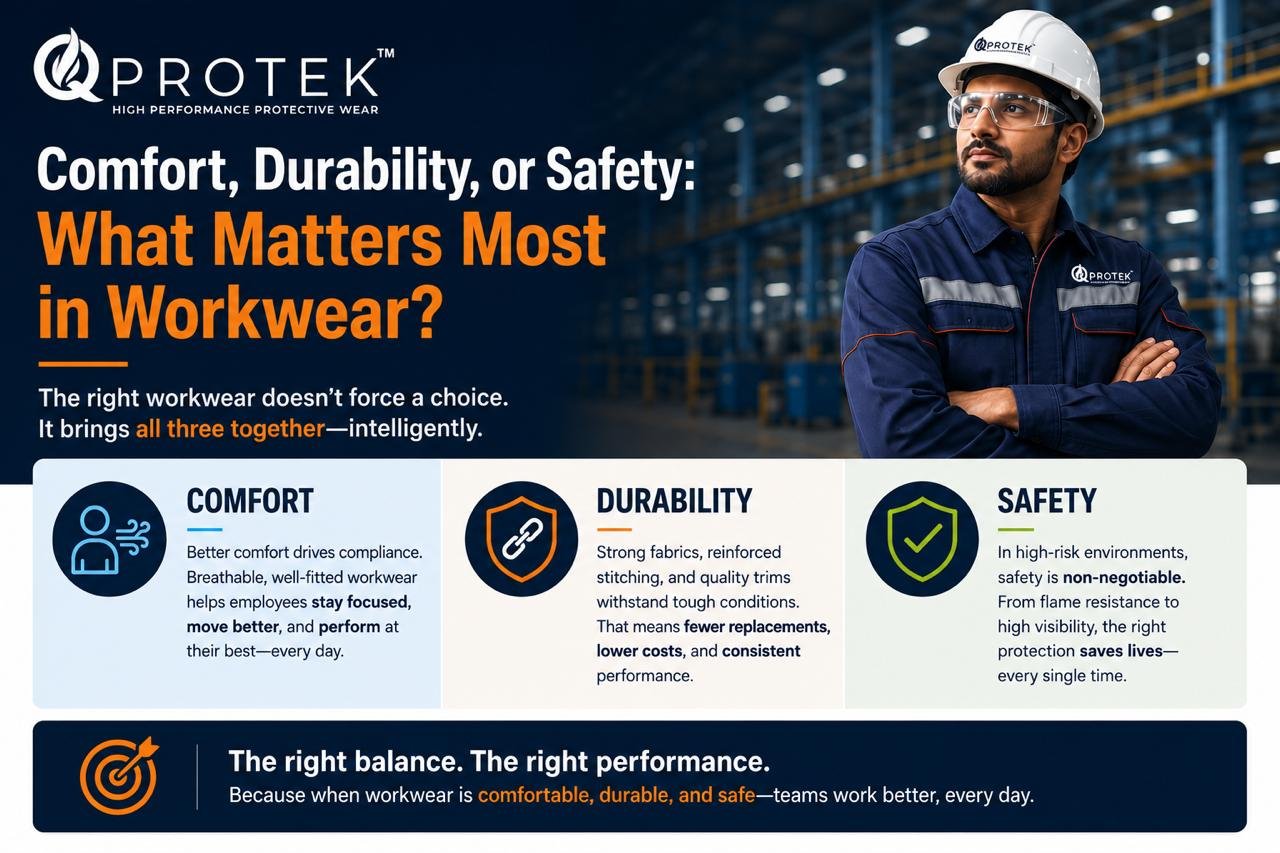
Comfort, Durability, or Safety: What Matters Most in Workwear?

0

This question comes up often because it exposes an important truth: most organizations know
industrial workwear matters, but they do not always agree on what matters most. Comfort,
durability, and safety are all essential, yet the right priority depends on the environment and the
job function. A useful workwear strategy does not choose one and ignore the others. It balances
them intelligently.
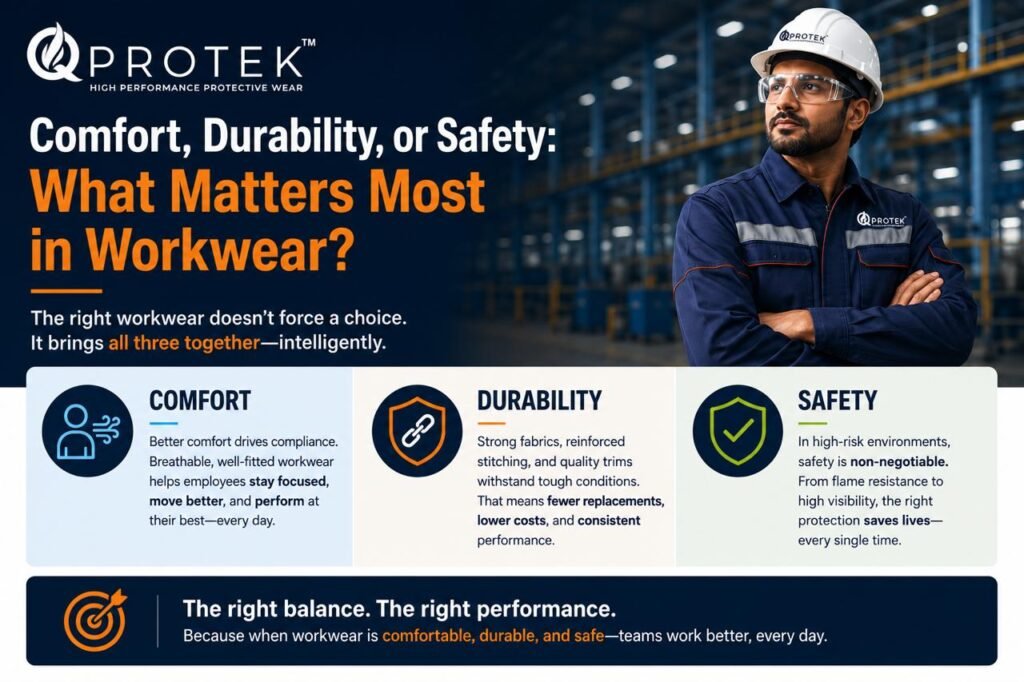
Comfort is often underestimated because it sounds secondary to more serious concerns like
protection or cost. But in reality, comfort influences whether employees actually wear the garment
correctly and consistently. In hot climates, long-shift settings, and high-movement jobs,
discomfort becomes a productivity issue. If a uniform is heavy, stiff, poorly ventilated, or badly
fitted, employees lose energy dealing with the garment itself. Over time, that can affect focus,
morale, and even compliance.
Durability is the next critical factor. Industrial garments are subjected to repeated wear, washing,
friction, and task-related strain. A weak seam, poor-quality fabric, or badly chosen trim can
shorten garment life dramatically. This creates a cycle of replacement costs and operational
inconsistency.
Organizations often believe they are saving money by buying cheaper uniforms, but if the garment
fails early, the real cost becomes much higher.
Safety, however, is non-negotiable in many industrial settings. In hazardous environments,
workwear is not just clothing; it is part of the protection system. Flame resistance, high visibility,
abrasion resistance, and other risk-specific features may be required depending on the task and
the site. In these environments, safety cannot be compromised for comfort or aesthetic appeal. If
a garment does not support the required protection level, it is not fit for purpose.
The best industrial workwear combines all three factors in proportion to the role. For a warehouse
team, breathable comfort and durability may matter more than high-risk protection. For a
fabrication or maintenance team, durability and safety may carry greater weight. For EPC site
staff, the safety requirement may dominate the specification entirely. That is why one universal
definition of “good workwear” does not work.
This also means that buyers should stop asking generic questions and start asking contextual
ones. What task will the employee perform? What climate will they work in? How long are the
shifts? What risks exist on the site? How often will the garment be washed? How much mobility is
required? These questions lead to smarter purchasing decisions and better employee outcomes.
The real answer is that comfort, durability, and safety are not competing values. They are layers of
the same solution. The right workwear does not force a trade-off where one priority destroys
another. It is designed so that the employee can work safely, comfortably, and consistently over
time.
That is what separates basic uniforms from serious industrial workwear.

Leave a Reply

Your email address will not be published. Required fields are marked *