Productivity discussions in industrial environments usually focus on equipment, process, training,
or manpower. Workwear rarely enters the conversation, even though it affects the employee’s
physical experience every single day. Better workwear does not replace operational discipline, but
it can remove small frictions that quietly reduce efficiency across teams.
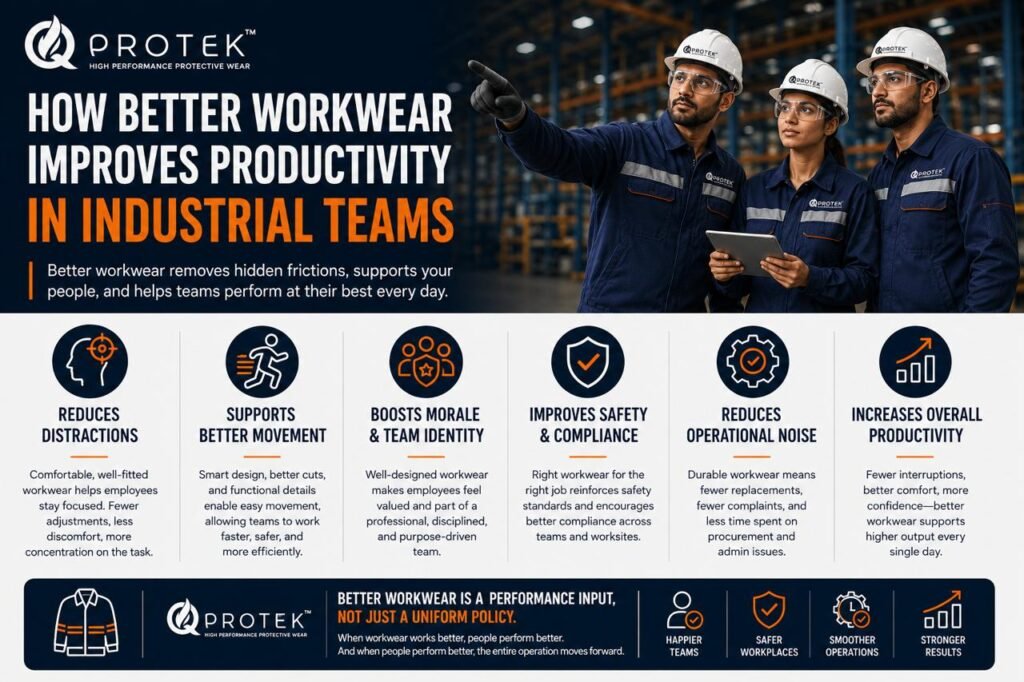
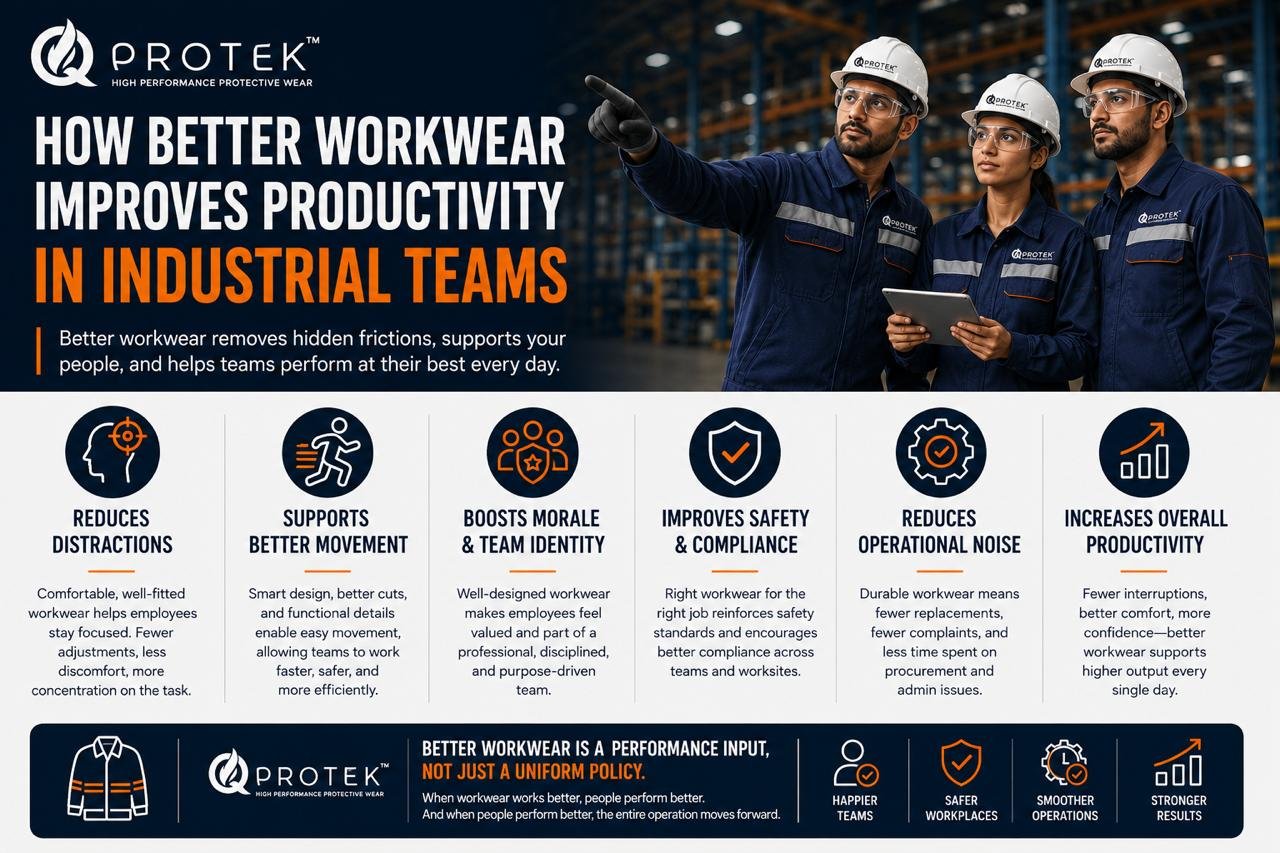
One of the most immediate productivity benefits of better workwear is reduced distraction.
Employees who are constantly adjusting their sleeves, feeling overheated, or struggling with poor
fit are mentally spending energy on their clothing instead of their work. That sounds small, but in a
long shift environment, small frictions accumulate. A garment that feels natural and unobtrusive
allows workers to stay focused for longer periods.
Better workwear also supports movement. Industrial roles often require bending, lifting, reaching,
walking, climbing, or carrying tools. If the garment restricts motion, the worker has to adapt to the
uniform instead of the uniform supporting the task. Functional design — including better cuts,
reinforcements, pocket placement, and fabric selection — improves how efficiently people can
move through their workday.
There is a psychological dimension too. When employees wear workwear that feels well thought
out, they tend to perceive the organization as more professional and more considerate. That
perception matters. It can strengthen morale, reinforce team identity, and improve the sense that
the workplace operates with structure and intent. Teams that feel respected often show better
discipline and engagement.
Workwear can also reduce operational noise. Garments that wear out too quickly, lose shape after
washing, or fail at stress points create repeated replacement requests and procurement
interruptions. A more durable solution reduces these disruptions and improves consistency
across the workforce. That means less time spent managing complaints and more time spent
managing operations.
In high-volume industrial settings, productivity is not only about output per hour. It is also about
the number of avoidable interruptions that occur across the day. A poor-quality uniform may not
appear on a dashboard, but it can contribute to discomfort, complaints, non-compliance, and
lower confidence. A better garment removes one more source of friction from the employee
experience.
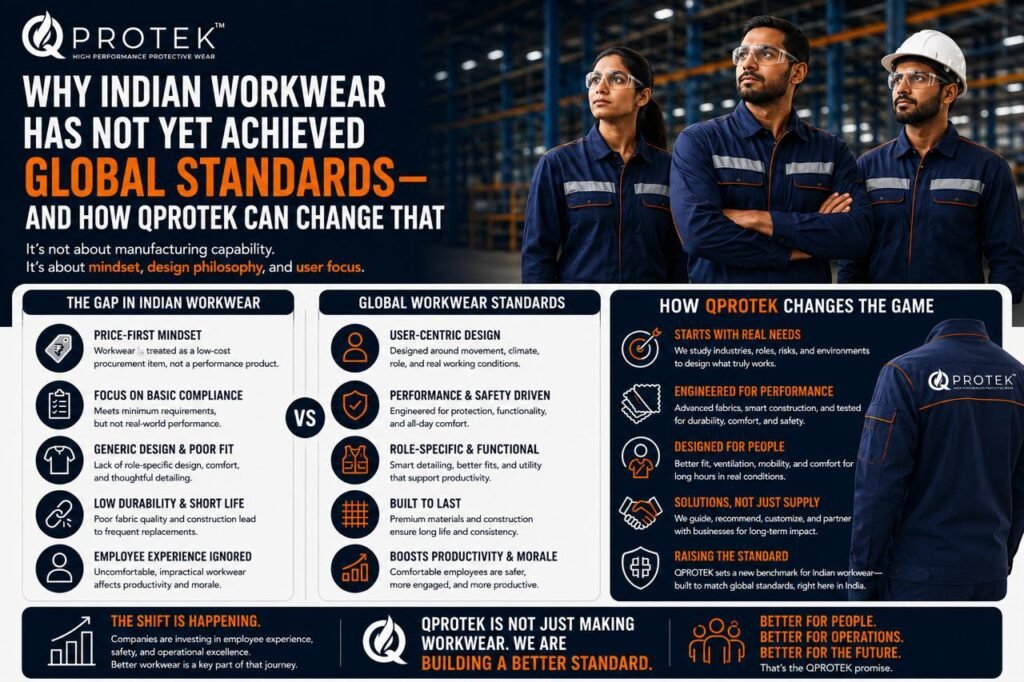
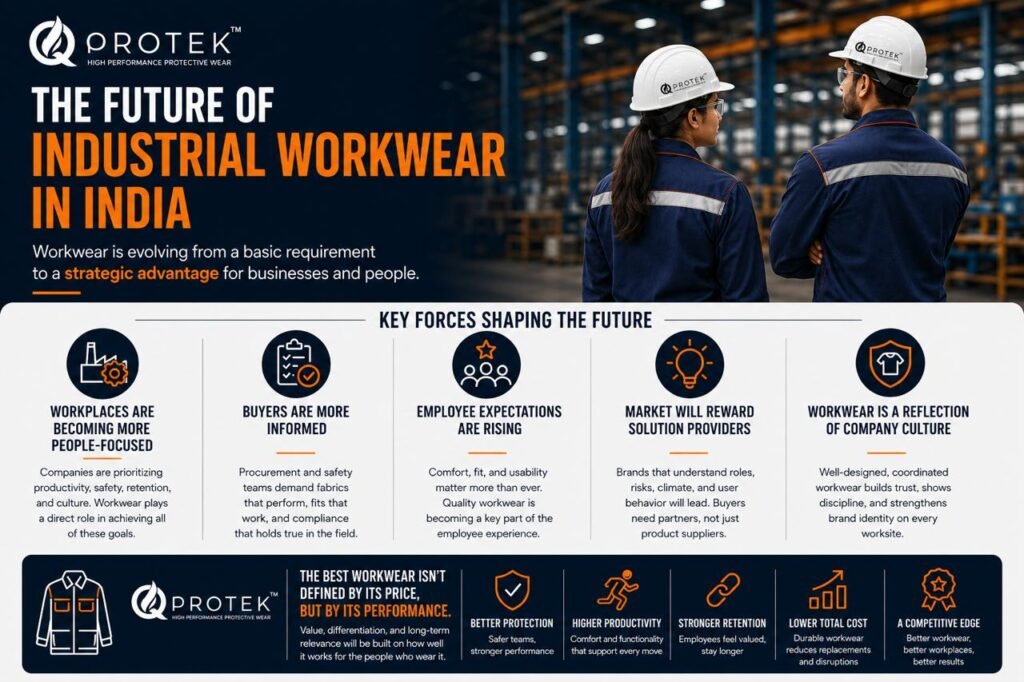
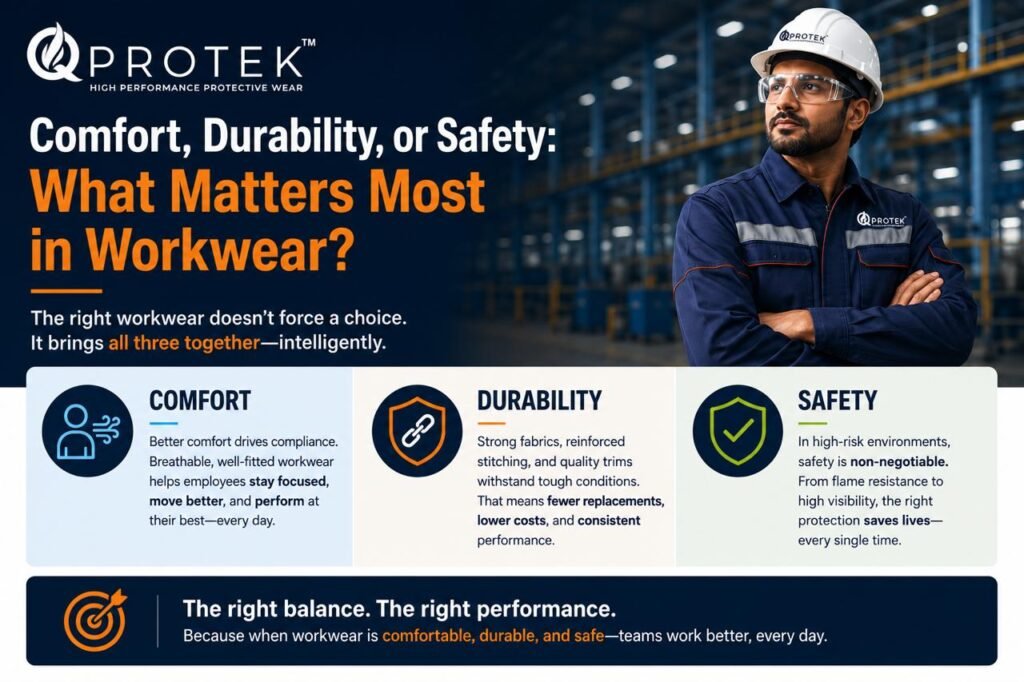
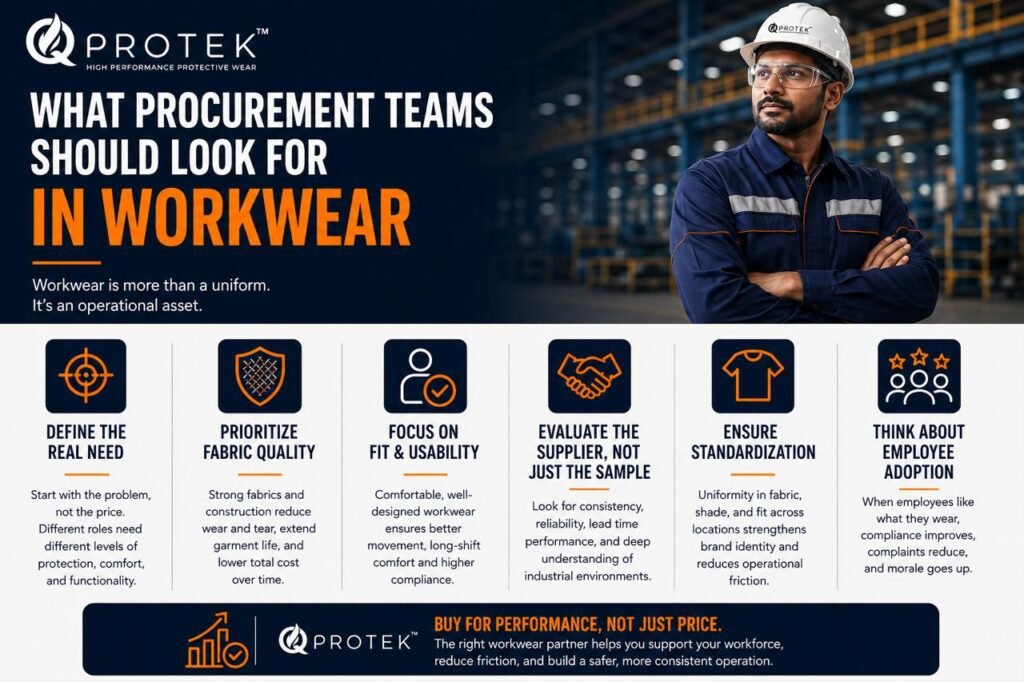
This is why leading organizations are beginning to treat workwear as a performance input. They
are not buying clothing simply to meet a uniform policy. They are investing in apparel that helps
people work more effectively in real-world conditions.
That shift is important because industrial productivity is built from many details. Workwear is one
of those details — and when it is designed well, it can support everything else.