Why Indian Workwear Has Not Yet Achieved Global Standards — and How QPROTEK Can Change That
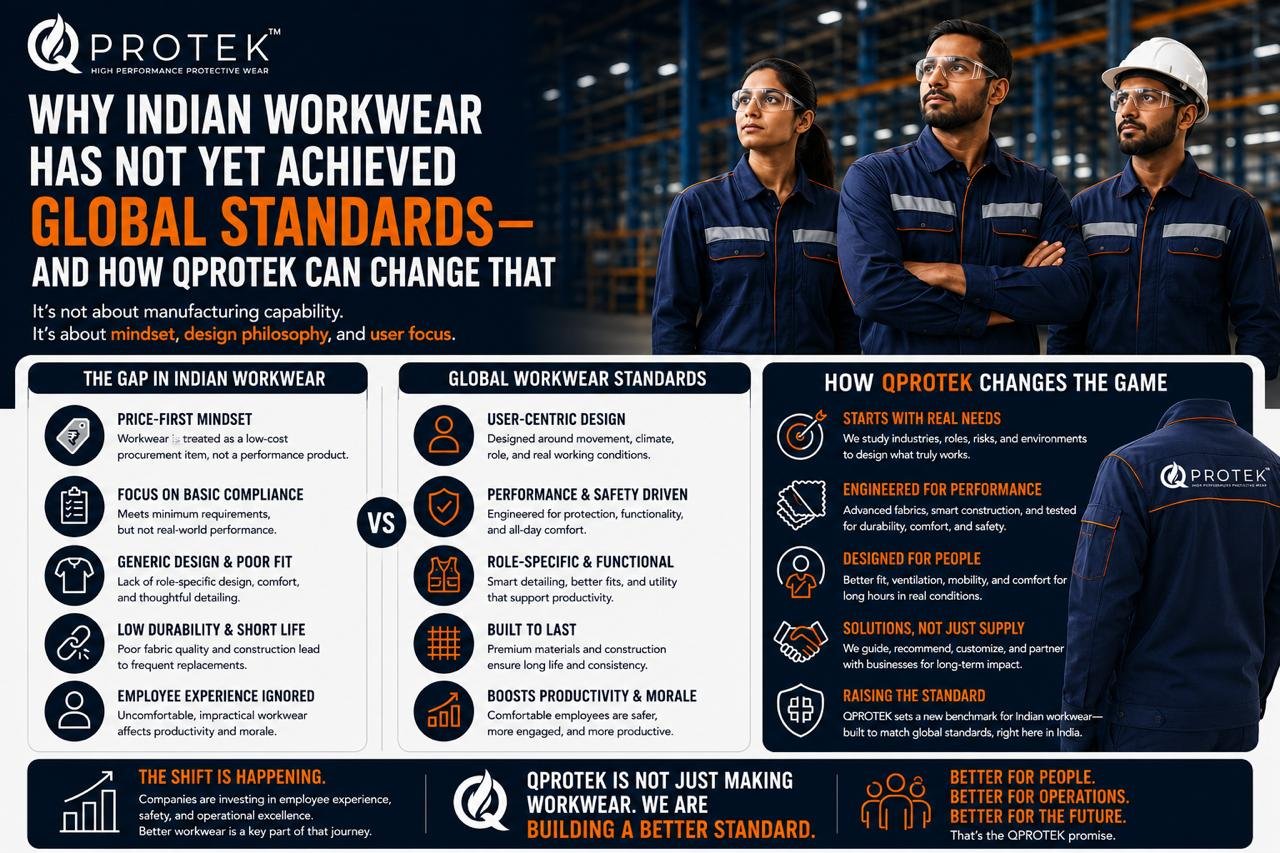
Indian industrial workwear has grown in volume, but not always in quality, innovation, or strategic
relevance. In many parts of the market, uniforms are still treated as a low-cost procurement item
rather than a performance product. That mindset has limited the industry’s ability to reach global
standards in design, durability, functionality, and user experience.
The issue is not that India lacks manufacturing capability. In fact, India has strong textile
infrastructure, skilled production talent, and deep experience in garment manufacturing. The real
gap lies in how industrial workwear has historically been positioned and developed. Too often, the
focus has been on bulk supply, basic compliance, and cost control. Very little attention has been
given to engineering the garment around the real needs of the worker.
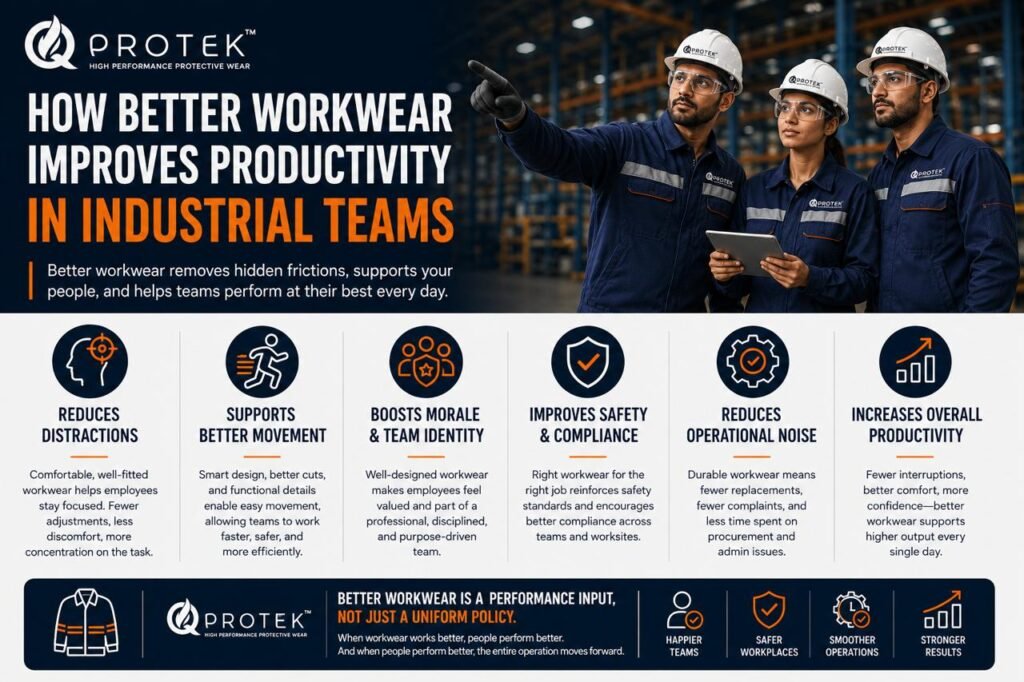
Global workwear standards are built on a different philosophy. They start with the end user. The
best international brands think about movement, climate, role-specific use, safety requirements,
garment life cycle, and the
psychological experience of wearing the product for long hours. Workwear is designed to improve
comfort, support productivity, and withstand demanding conditions without losing shape or
function. In many cases, it is treated as a workplace performance tool, not a commodity.
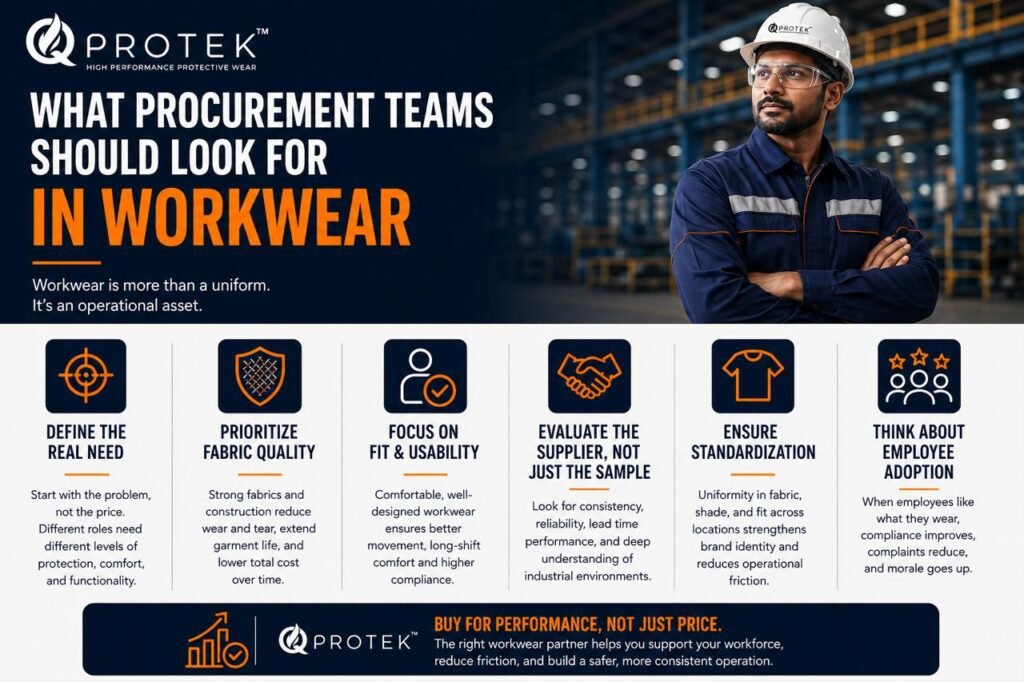
In India, however, many buyers still evaluate workwear primarily on price and immediate
availability. This has created a market where generic garments often win over better-designed
solutions. As a result, employees frequently end up wearing apparel that is uncomfortable, poorly
fitted, too warm, too stiff, or not durable enough for actual industrial use. When that happens, the
garment fails its purpose, even if it meets the basic purchase order requirement.
There is also a design gap. Industrial workwear in India has often lacked thoughtful detailing,
modern fits, and functional utility. Pocket placement, reinforcement, ventilation, closure systems,
fabric selection, and climate suitability are not always treated as strategic design decisions. But
these are exactly the elements that separate a basic uniform from a serious workwear solution. If
the product does not work in the field, it cannot be considered truly premium — regardless of how
it looks in a catalog.
This is where QPROTEK can become a game changer. Not by simply entering the market as
another supplier, but by shifting the conversation entirely. QPROTEK has the opportunity to
redefine industrial workwear around utility, employee comfort, operational relevance, and brandlevel thinking. That means designing for actual use conditions, not just for tender specifications.
A game-changing brand in this space must do several things differently. First, it must treat
workwear as a product category with real performance expectations. Second, it must understand
the needs of manufacturing, logistics, EPC, warehousing, and infrastructure teams at a deeper
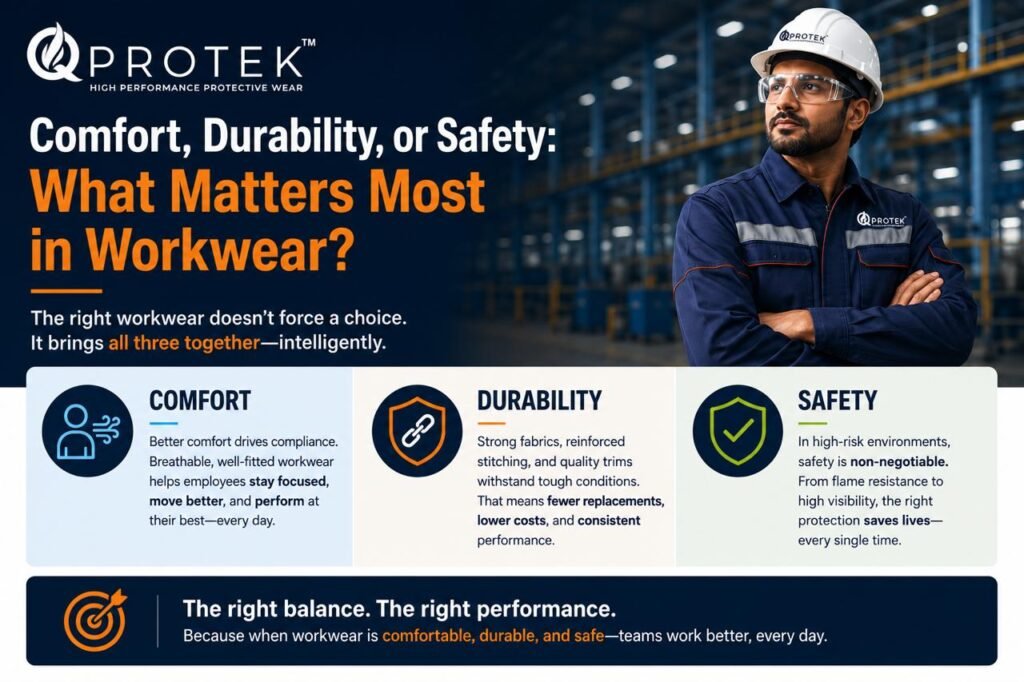
level. Third, it must create apparel that combines durability, comfort, and professional appearance
without compromise. And fourth, it must communicate value in a way that helps buyers move
beyond the lowest-cost mindset.
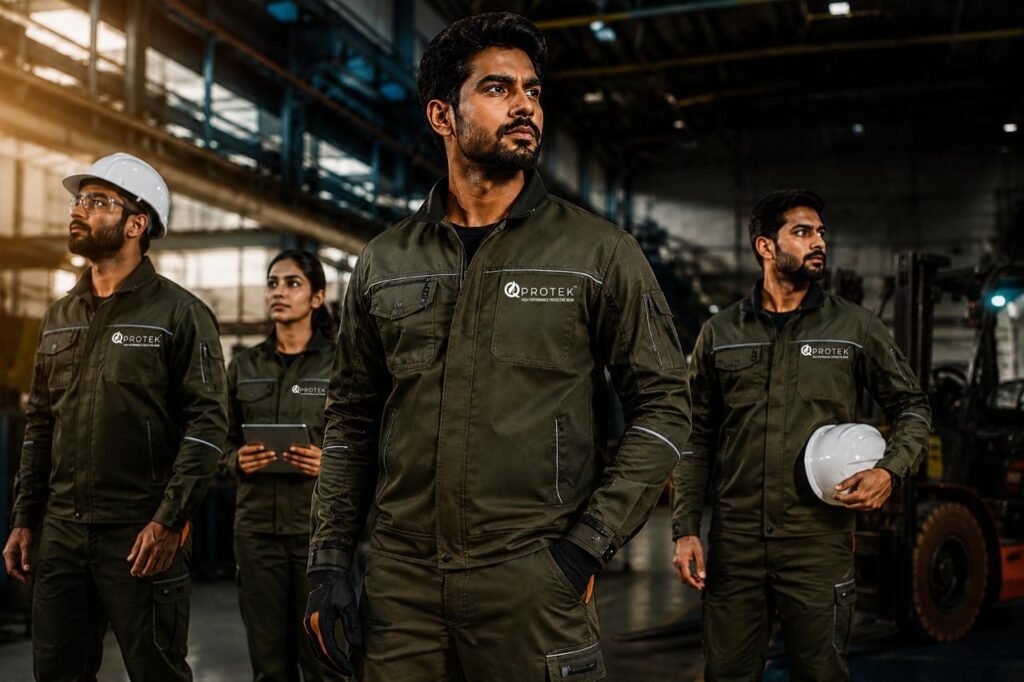
QPROTEK can stand for a new standard in Indian workwear — one where the garment is built to
support the employee, the operation, and the brand simultaneously. That means better materials,
better design logic, better fit, and better relevance to modern industrial environments. It also
means helping customers see workwear not as an expense to minimize, but as a business tool
that influences safety, morale, consistency, and workplace identity.
The Indian market is ready for this shift. As companies grow more conscious of employee
experience, operational discipline, and workplace professionalism, the demand for better
industrial apparel will rise. The brands that win will be the ones that solve real problems with
clarity and consistency.
QPROTEK has the potential to lead that change by proving that Indian workwear can do more
than match the market — it can raise the standard.